

Listening
"Settling into the Home Office"
Listen to the conversation and choose True or False.(12.6)
True or False
Your Time : 0 Seconds
Your Score :
Your Time : Seconds
Congratulations! You Passed the Quiz!
Listen again then fill the blanks with the correct form. (12.6)
Fill in the Blanks
Your Time :
0
Seconds
Your Score :
Your Time : Seconds
Congratulations! You Passed the Quiz!
"Getting Used to Grammar "

Listen and choose the best option (12.7)
Select the Correct Option
Your Time : 0 Seconds
Your Score :
Your Time : Seconds
Congratulations! You Passed the Quiz!
 Spotlight!
📌یادتون باشه: عبارت “Get used to” شبیه فرآیند نوشتن کده (یعنی در حال سازگاری با یه وضعیت جدید هستید). اما “Be used to” شبیه زمانیه که کد شما کامپایل شده و بدون باگ اجرا میشه (یعنی کاملاً عادت کردهاید و وضعیت عادیه).
حالا که این تفاوت کلیدی بین «فرایند» و «نتیجه» رو فهمیدید، برای جزئیات ساختار و کاربردهای گرامری،بخش گرامر را دنبال کنید!
Reading
"People Today and Artificial Intelligence"

Every programmer sees it every day — that tiny blinking line on the screen. It looks quiet, but it’s one of the most important tools in the coding world. The cursor shows where your next action will happen: a new word, a piece of code, or an unexpected bug!
In the early days of computing, the cursor was simple. It had just blinked on black screens, showing where text would appear. Programmers had used it to type long commands carefully, sometimes hours without mistakes. A wrong line could stop the whole system!
Today, the cursor lives inside every smart IDE and text editor. It can move fast, copy, paste, and even become multi‑cursor, editing several lines at the same time. Many developers say that the multi‑cursor tool has changed the way they code. It saves minutes, which later become hours — and every hour counts when deadlines are close.
The cursor may look small, but without it, programming would feel impossible. It’s like a bridge between human thought and machine logic. So next time it blinks, think about this: the first line of your next great project will begin exactly where that tiny hero stands — waiting for your next key.
Read the text and choose if the sentences are True or False.
True or False
Your Time : 0 Seconds
Your Score :
Your Time : Seconds
Congratulations! You Passed the Quiz!
According to the text choose the best.
Select the Correct Option
Your Time : 0 Seconds
Your Score :
Your Time : Seconds
Congratulations! You Passed the Quiz!
Debug your Grammar
"Be Used To & Get Used To"
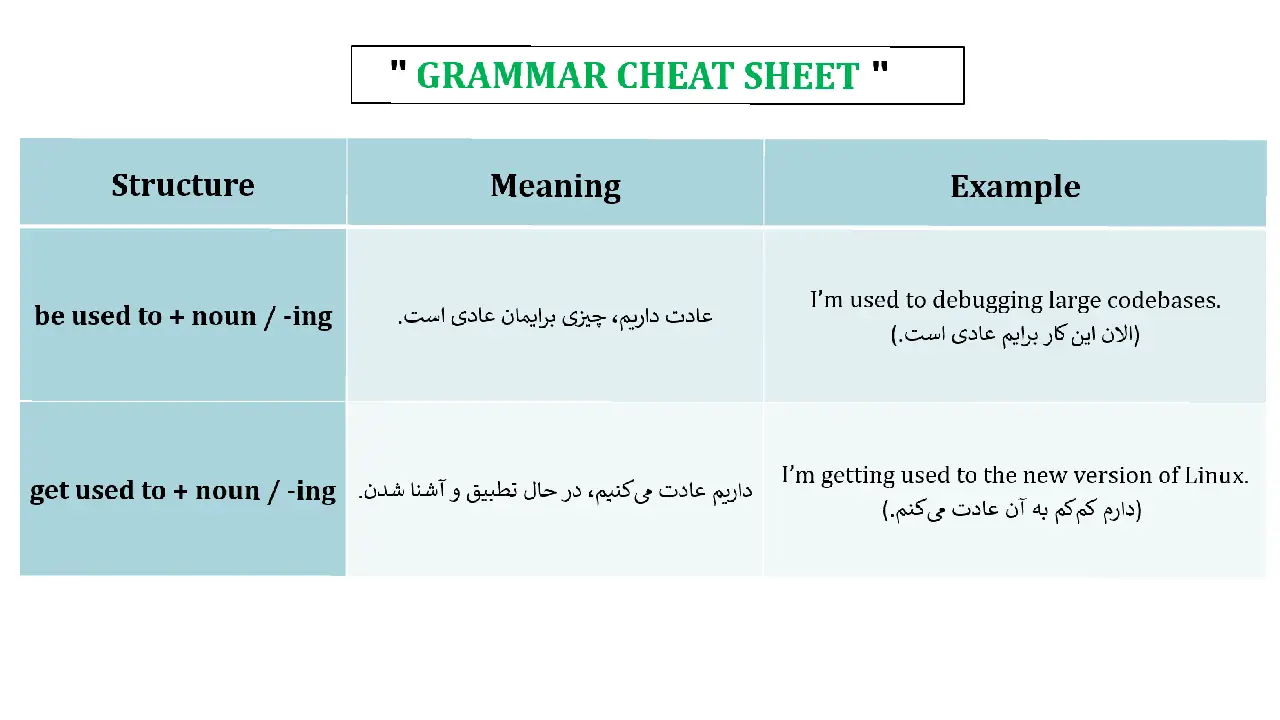
📌در زبان انگلیسی، وقتی میخواهیم دربارهٔ عادتها و آشنا شدن با چیزها صحبت کنیم، دو ساختار مهم داریم:be used to و get used to.
این دو عبارت خیلی شبیه هم هستند، اما معنیشان فرق دارد:
✅ be used to یعنی با چیزی راحت یا آشنا هستیم؛ برایمان عادی شده است.
مثال: I’m used to waking up early. → بیدار شدن زود برایم طبیعی است.
✅ get used to یعنی در حال عادت کردن به چیزی هستیم؛ هنوز کاملاً راحت نیستیم ولی داریم تطبیق پیدا میکنیم.
مثال: I’m getting used to waking up early. → دارم کمکم عادت میکنم زود بیدار شوم.
Read the questions and choose the best option:
Select the Correct Option
Your Time : 0 Seconds
Your Score :
Your Time : Seconds
Congratulations! You Passed the Quiz!
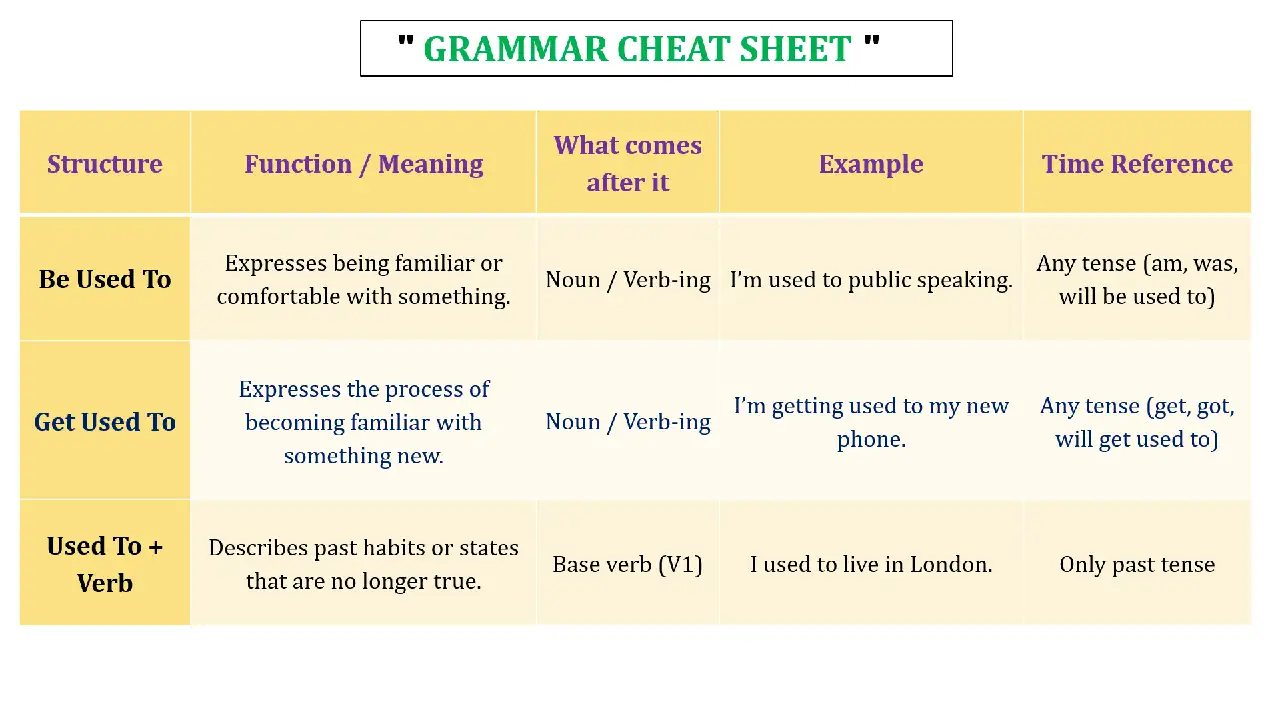
📌نکته مهم!
be used to و get used to دربارهی احساس راحتی یا عادتکردن به چیزی هستند و بعد از آنها اسم یا فعل با ing میآید.
اما used to + verb دربارهی کارها یا موقعیتهایی است که در گذشته انجام میشده ولی دیگر انجام نمیشود.
Read the questions and fill in the blanks:
Fill in the Blanks
Your Time :
0
Seconds
Your Score :
Your Time : Seconds
Congratulations! You Passed the Quiz!
Buzzwords & Beyond!
"Supporting Global Talent Through Effective Onboarding"

In modern global tech companies, new employees often arrive from very different cultural and linguistic backgrounds. Because of this diversity, the onboarding experience can feel overwhelming, especially when workplace communication moves quickly or expectations are not clearly explained. Many newcomers need time to find one’s feet, not because they lack skills, but because the organization’s internal style, vocabulary, and decision‑making habits may be completely new to them.
A well‑organized knowledge‑base can make a significant difference. When procedures, tools, and workflows are documented clearly, new staff can review information at their own pace instead of relying only on meetings or quick instructions. This reduces stress and helps them participate more confidently in discussions. It also encourages independence, allowing employees to explore topics they might feel too shy to ask about in group settings.
To make the process even more effective, companies can provide short orientation sessions that highlight cultural norms, communication expectations, and examples of good collaboration. Managers who check in regularly and encourage questions create an environment where international employees feel supported rather than judged. When organizations invest in these small but meaningful steps, new team members adapt faster, connect more naturally with colleagues, and contribute their ideas with greater impact.
Match the items.
Match the Items
Your Time : 0 Seconds
Your Score :
Your Time : Seconds